
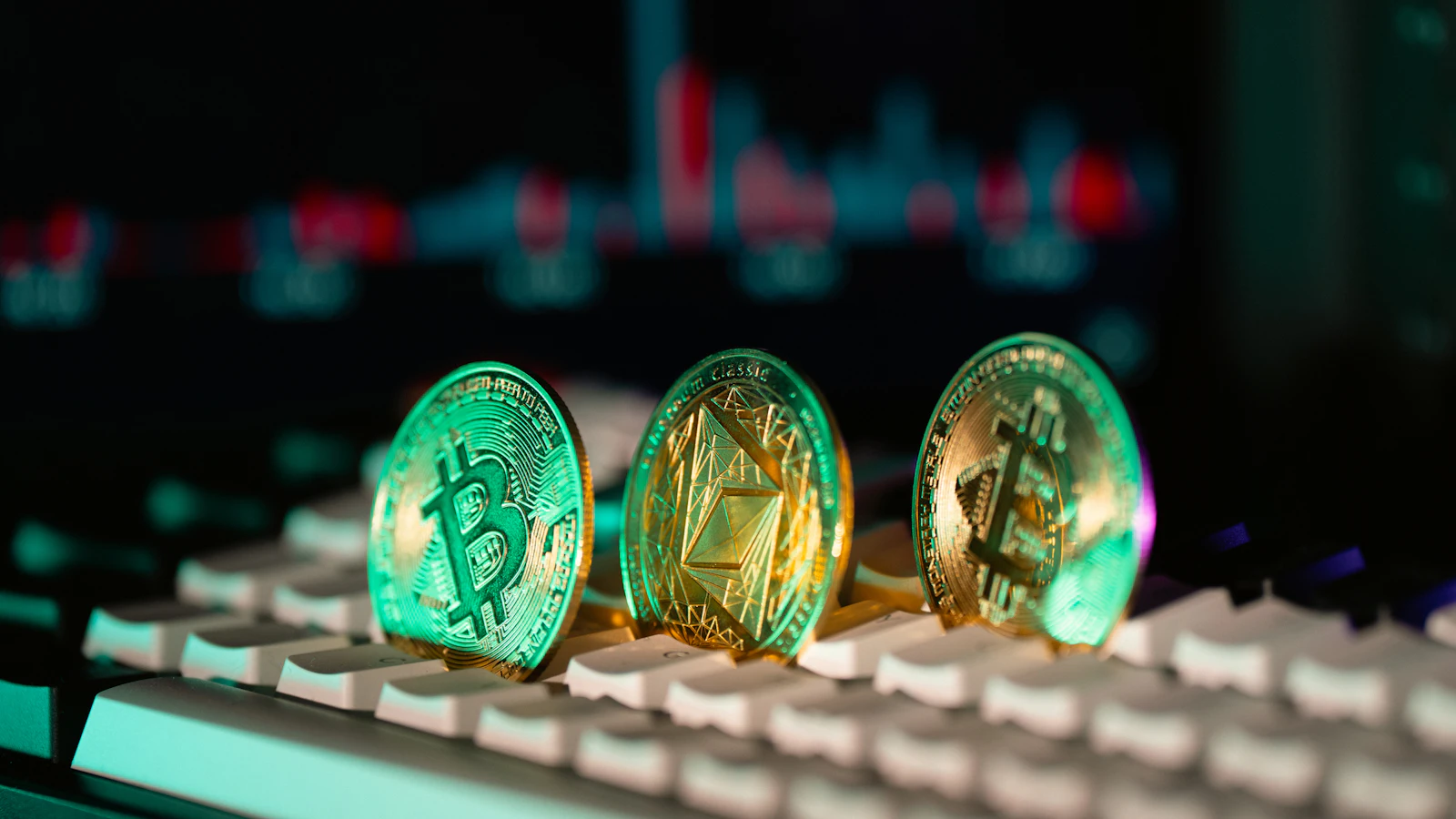
Crypto, around the clock.
Trade the coins we support against the US dollar and tether, every day of the week. There is no commission, and the spread is shown before you confirm.
- Instruments
- 14
- Trading hours (UK time)
- 24 hours, every day
- Typical cost
- No commission — spread shown before you confirm
- Leverage
- No leverage
What crypto is.
Crypto assets are digital coins that run on networks of computers rather than being issued by a bank. Bitcoin was the first. Ether is the coin of the Ethereum network. Tether (USDT) and USD Coin (USDC) are stablecoins, designed to stay close to one US dollar.
On Replicate Traders you trade fifty coins, from Bitcoin, Ether and Solana to Dogecoin, Cardano and Chainlink, against the US dollar, and the six most-traded of them against tether. The coins you hold stay as coins in your account; the account balance itself is in US dollars only.
Crypto has no central exchange and no opening hours. Prices are set by trading across many venues at once, and we take ours from public market data. Because there is no closing bell, prices can move at any hour, including weekends and public holidays.
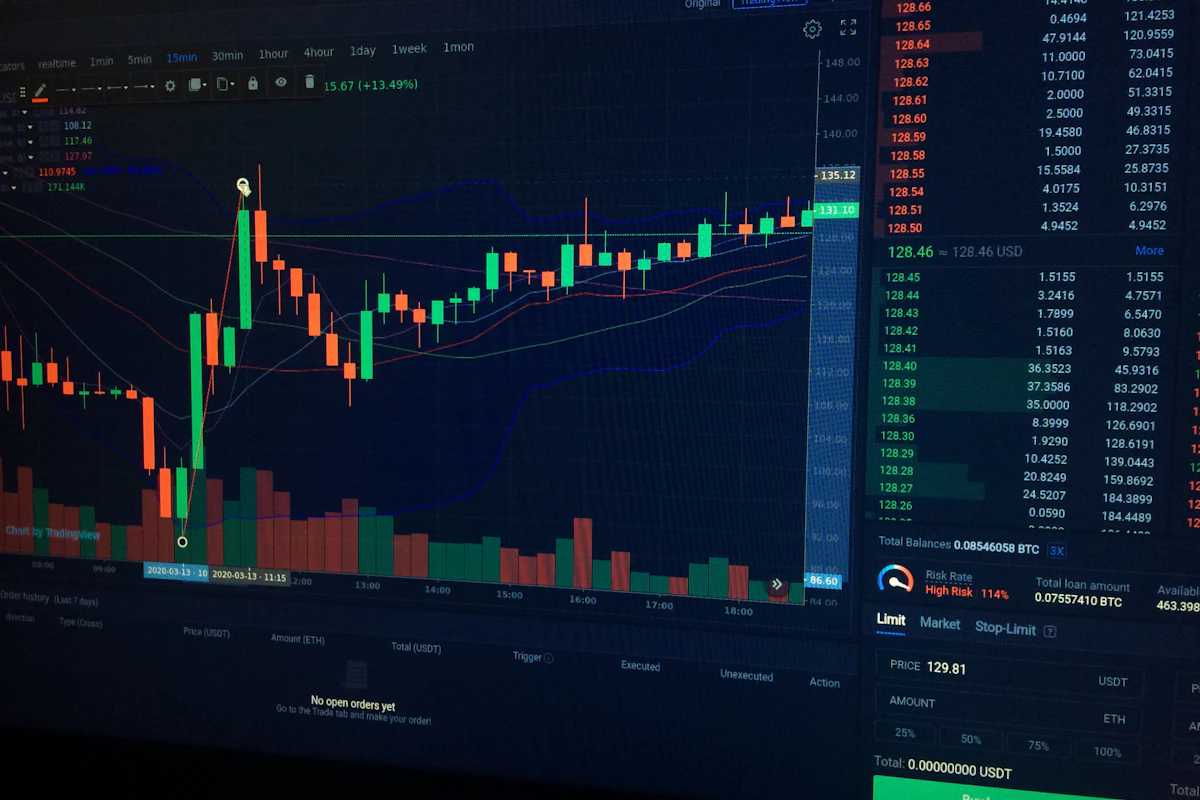
What moves crypto prices.
Crypto prices move with regulation and legal decisions, new technology and network upgrades, and large holders buying or selling. They also react to interest rates and to how much risk investors want to take. Because crypto trades around the clock, prices can move while other markets are closed.
- Rules and legal decisions
- Approvals, bans and court rulings change who may buy a coin and how easily. News of new rules can move prices within minutes, in either direction.
- Technology and adoption
- Network upgrades, new uses and changes in fees affect what a coin is for and how many people want it.
- Large holders
- Funds and large holders buying or selling can move a price quickly, most of all when few other people are trading.
- Risk appetite and interest rates
- Crypto tends to do better when investors are willing to take risk and worse when they are not. Rising interest rates can pull money away from it, and falling rates can send money back.
- Stablecoins are different
- Tether and USD Coin are built to stay near $1.00, so their price barely moves. The risk with a stablecoin is not the daily price but whether it keeps its peg to the dollar.
Crypto trading hours.
Each bar is a 24-hour day in UK time. The gold stretch is when the market trades.
-
Crypto 24 hours, every day
Crypto trades 24 hours a day, every day of the week, including weekends and public holidays. There is no open or close, so prices can move at any time.
Spreads are usually tightest during the busiest hours, when more buyers and sellers are active. They can widen when trading is thin or when the price moves quickly. Check the spread before you confirm.
There is no open or close, and no weekend. Spreads are usually tightest when the most buyers and sellers are active, and they can widen when trading is thin or the price moves quickly.
When a market is closed
Crypto itself never closes. If our price for a coin is more than two minutes old, for example because a data source has stopped answering, that coin's orders are refused until the price updates, even though the market is open.
Outside its trading hours a market has no new prices. The price on screen is the last close. It can still be traded for a short while after the close, until the price we hold is older than the market accepts: 2 minutes for most markets, and a little longer for the markets whose free data arrives late (the delay of that data plus 2 minutes). After that, buying and selling are refused until the market opens and the price updates.
Crypto pairs to trade.
Every instrument in this market, their trading hours in UK time and their typical spread or cost.
| Instrument | Name | Trading hours (UK time) | Typical spread or cost |
|---|---|---|---|
| BTC/USD | Bitcoin / US dollar | 24 hours, every day | No commission — spread shown before you confirm |
| ETH/USD | Ether / US dollar | 24 hours, every day | No commission — spread shown before you confirm |
| USDT/USD | Tether / US dollar | 24 hours, every day | No commission — spread shown before you confirm |
| USDC/USD | USD Coin / US dollar | 24 hours, every day | No commission — spread shown before you confirm |
| BNB/USD | BNB / US dollar | 24 hours, every day | No commission — spread shown before you confirm |
| SOL/USD | Solana / US dollar | 24 hours, every day | No commission — spread shown before you confirm |
| TRX/USD | TRON / US dollar | 24 hours, every day | No commission — spread shown before you confirm |
| XRP/USD | XRP / US dollar | 24 hours, every day | No commission — spread shown before you confirm |
| BTC/USDT | Bitcoin / Tether | 24 hours, every day | No commission — spread shown before you confirm |
| ETH/USDT | Ether / Tether | 24 hours, every day | No commission — spread shown before you confirm |
| SOL/USDT | Solana / Tether | 24 hours, every day | No commission — spread shown before you confirm |
| XRP/USDT | XRP / Tether | 24 hours, every day | No commission — spread shown before you confirm |
| BNB/USDT | BNB / Tether | 24 hours, every day | No commission — spread shown before you confirm |
| TRX/USDT | TRON / Tether | 24 hours, every day | No commission — spread shown before you confirm |
Typical spreads are for a standard account while the market is liquid; they can widen around news and at the open. No commission; the spread is the cost, and it is shown before you confirm. Trading is unleveraged: you can lose what you put in, not more.
BTC/USD, live.
The live chart for this market's lead instrument. Prices are indicative and may be delayed.
How a trade works here.
Four steps, the same in every market. Nothing is borrowed, and the price you see is the price you trade at.
-
Pick an instrument and read its two prices
Every instrument shows a buy price and a sell price. You buy at the higher one, the ask, and you sell at the lower one, the bid. The gap between them is the spread, and it is the only thing a trade costs: there is no commission.
-
Choose how much to buy
Enter an amount. The smallest buy order is $10. It is paid from the money in your account, so nothing is borrowed and there is no leverage. Real-money trading needs an approved identity check; the demo balance does not.
-
Confirm, and the order fills at the live price
A market order fills straight away at the live price: a buy at the ask, a sell at the bid. If the price has moved against you by more than twice the spread since you last looked, the order stops and asks you to check the new price, so you never fill at a price you were not shown.
-
Sell to close
You close a position by selling what you hold. You can only sell what you own, so the most a position can lose is what you put into it. Limit and stop orders are there too: they wait until the price reaches the level you set.
The rules the platform keeps for you.
- No leverage
- You trade with your own money only. You can lose what you put in, not more.
- No stale prices
- Every market has a limit on how old a price we take. For most it is 2 minutes. A few use free data that arrives late, such as shares outside the US, futures and some indices: they take a price up to that delay plus 2 minutes old, so you trade at the late price the screen shows, and the screen says how late it is. If the latest price we hold is older than the market's limit, it is treated as closed and the order is refused with this message: "This market's price is delayed or the market is closed, so it can't be traded right now."
- Price protection
- A market order is refused if the fill would be worse than the price you confirmed by more than twice the spread. A better price is fine.
- Practise first
- Every account comes with a $100,000.00 demo balance. Demo money is separate from real money.
What can go wrong.
Investing and trading involve risk. The value of your investments can go down as well as up, and you may get back less than you put in. Past performance is not a guide to the future.
Prices can swing widely
A coin can move sharply in a day, at any hour, and there is no opening bell or daily limit to slow it down. A coin can lose most of its value and may not come back.
Trading never stops
Prices move at night and at weekends while other markets are shut. Check the spread before you confirm, because it can be wider when trading is thin.
Stablecoins can lose their peg
A stablecoin is designed to stay at $1.00 but is not guaranteed to. If confidence in it fails, its price can fall away from the dollar.
Unleveraged is not risk-free
You trade only with your own money, so you can lose what you put in but not more. Because crypto is volatile, that can happen quickly.
Anything about trading hours, costs or the rules is in the table, the chart and the sections above. For anything else, the help centre has more.
Questions about crypto.
When can I trade crypto?
Every day, around the clock, including weekends and public holidays. There is no open or close, so prices can move at any time.
Which crypto pairs are listed?
Fifty coins, from Bitcoin, ether and Solana to Dogecoin, Cardano and Chainlink, all quoted against the US dollar, plus the six most-traded quoted against tether. The table above lists the most-traded; Discover lists every one.
Why can crypto spreads widen?
Spreads widen when trading is thin or when the market moves quickly. That can happen at any hour because crypto never closes, so check the spread before you confirm.
What does it cost to trade crypto?
There is no commission. The cost is the spread, shown before you confirm. The default crypto spread is 0.10% of the price.
What is a stablecoin?
A coin designed to stay close to one US dollar. Tether (USDT), USD Coin (USDC) and Dai (DAI) are the ones we list. They move far less than other coins, but they can lose their peg.
Can I earn on crypto I hold?
Some coins can be staked, which means using them to support a network in return for a reward. The coins, rates and unstaking periods are on the staking page.
Open an account to trade crypto.
Trading is unleveraged: you can lose what you put in, not more.